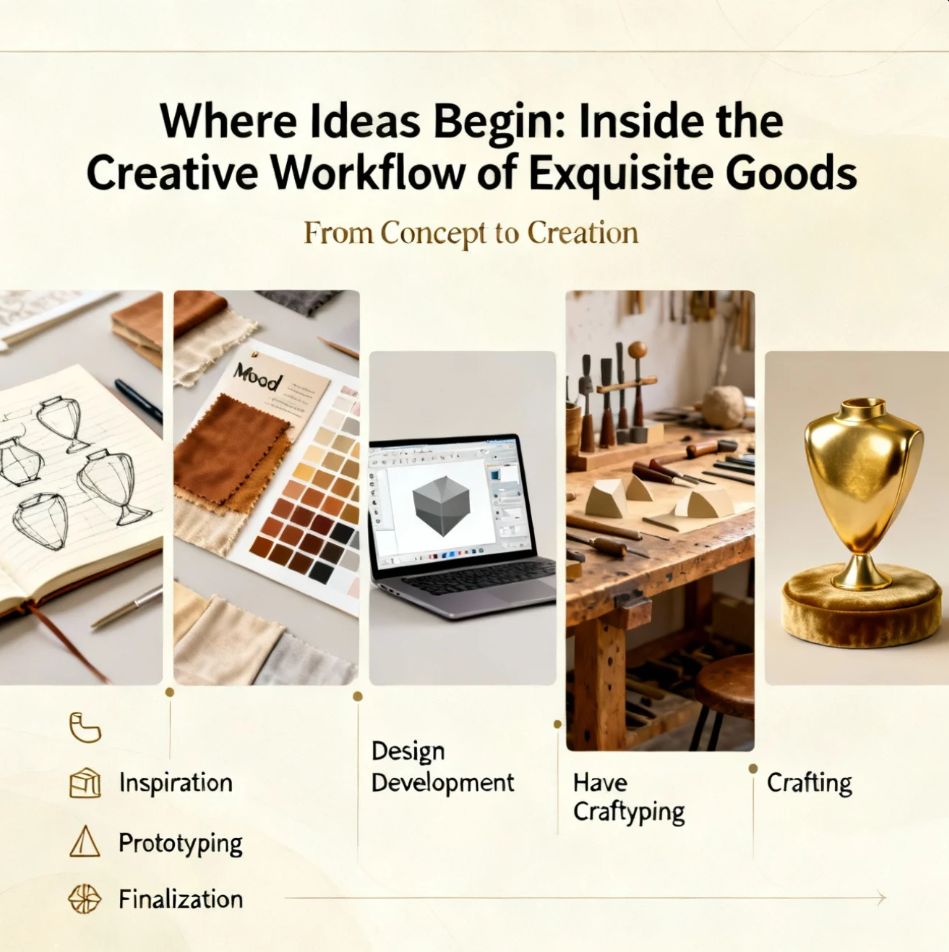
Exquisite goods are never accidental. Whether handcrafted jewelry, luxury fashion, fine furniture, or artisanal products, every exceptional piece begins with a carefully cultivated idea. The creative workflow of exquisite goods blends inspiration, discipline, craftsmanship, and refinement—transforming abstract concepts into tangible beauty.
Understanding this process reveals why true quality feels intentional, timeless, and emotionally resonant.
💡 1. Inspiration: The Origin of Every Exquisite Idea
Ideas often begin far from the workshop.
Designers and artisans draw inspiration from:
- Nature, architecture, and cultural heritage
- Personal experiences and emotional narratives
- Historical references and modern reinterpretations
At this stage, the goal isn’t perfection—it’s exploration. Mood boards, sketches, and material samples help shape the emotional direction of a piece before form is finalized.
In the creative workflow of exquisite goods, inspiration sets the soul of the product.
✏️ 2. Concept Development and Design Language
Once inspiration is defined, ideas move into structure.
This phase focuses on:
- Translating emotion into form
- Defining proportions, textures, and color palettes
- Establishing a consistent design language
Designers refine multiple iterations, balancing originality with function. Every curve, surface, and detail is questioned. Nothing is decorative without purpose.
This step ensures the final product feels cohesive—not accidental.
🧵 3. Material Selection and Craft Integrity
Materials are not chosen for trend, but for truth.
Exquisite goods rely on:
- High-quality, durable raw materials
- Ethical sourcing and sustainability
- Materials that age beautifully over time
Artisans test how materials respond to pressure, light, movement, and wear. The creative workflow of exquisite goods treats materials as collaborators—not commodities.
🔗 Outbound link: https://www.designcouncil.org.uk/our-work/skills-learning/design-process/
🛠️ 4. Prototyping and Iterative Refinement
Before a piece is finalized, it is tested—often repeatedly.
Prototyping allows creators to:
- Identify structural or aesthetic flaws
- Refine comfort, balance, and usability
- Adjust details invisible to the untrained eye
True refinement happens here. Small changes—millimeters, finishes, or stitching techniques—can define whether a product feels ordinary or extraordinary.
🎯 5. Quality Control and Finishing Touches
The final stage is where discipline meets pride.
This includes:
- Rigorous inspection and quality checks
- Hand-finishing and surface refinement
- Ensuring consistency across limited runs
Exquisite goods are often produced in small quantities because excellence demands time. Every finished piece must honor the original idea that inspired it.
🌿 6. Why the Creative Workflow Matters
In a world of mass production, the creative workflow of exquisite goods stands apart.
It prioritizes:
- Thoughtful creation over speed
- Longevity over disposability
- Emotional value over excess
Consumers increasingly seek products with stories, intention, and integrity. Understanding the workflow behind them deepens appreciation—and trust.
🔮 Final Thoughts: From Idea to Legacy
Where ideas begin matters. But how they are nurtured defines their legacy.
The creative workflow of exquisite goods transforms inspiration into craftsmanship, and craftsmanship into enduring value. It’s not just about making beautiful things—it’s about making things beautifully.
Leave a Reply